
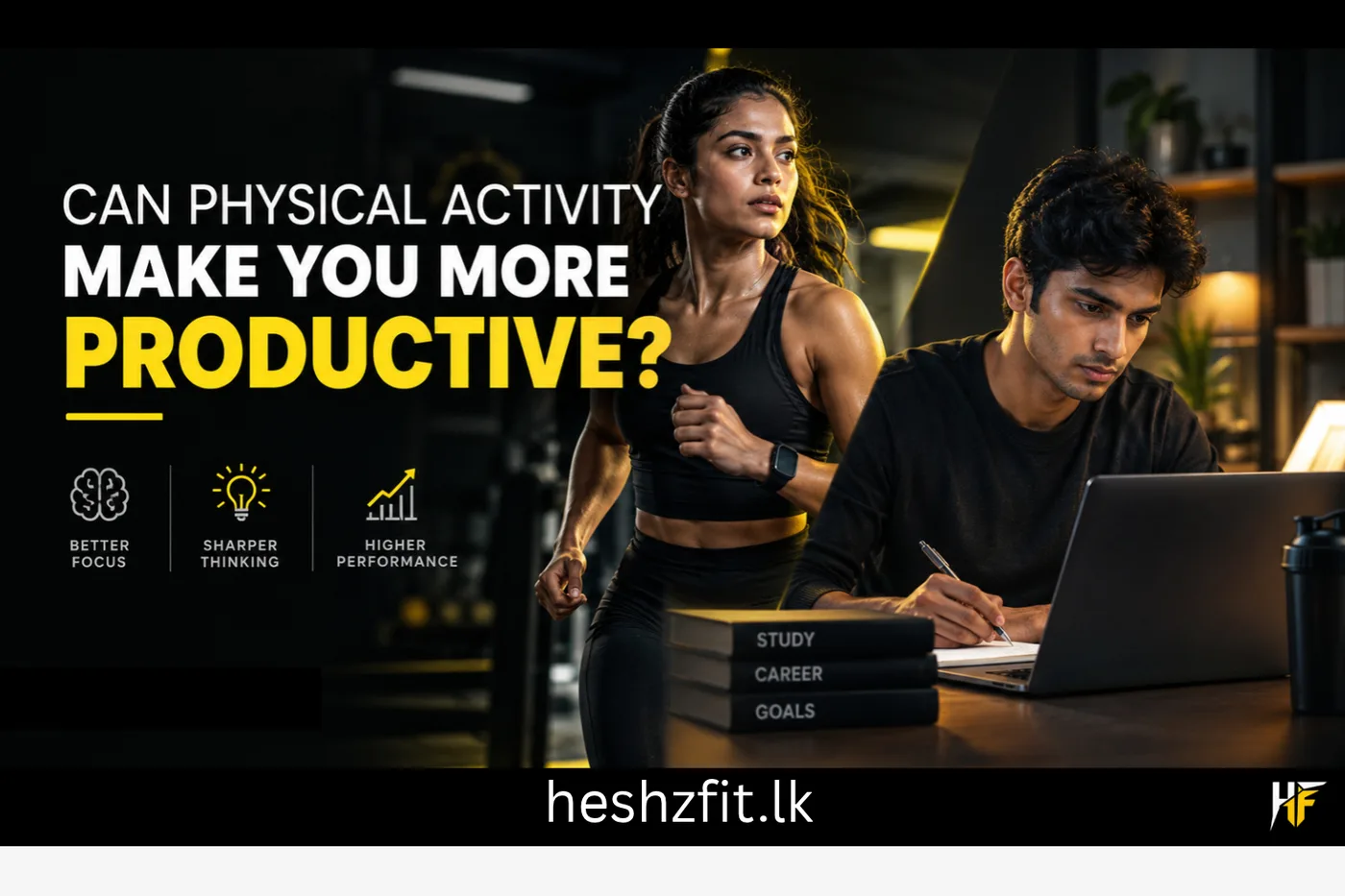
We often look for ways to become more productive. We buy new planners, download productivity apps, learn time-management techniques, and try to work longer hours. But what if one of the simplest ways to support better performance is to move our bodies more? Physical activity is usually discussed in terms of weight management, physical health, and appearance. However, research increasingly highlights its relationship with cognitive performance — including memory, attention, and decision-making. For university students, professionals, and entrepreneurs, this connection deserves more attention.
1. Exercise Can Support Better Thinking#
Productivity is not just about how many hours we work. It is also about how effectively we think, learn, solve problems, and make decisions.
Research Insights
A 2025 umbrella review published in the British Journal of Sports Medicine analysed 133 systematic reviews covering 2,724 randomised controlled trials and 258,279 participants. Researchers found that exercise was associated with improvements in general cognition, memory, and executive function.
Executive function includes mental skills that help us plan, control impulses, switch between tasks, and work toward goals. These abilities are valuable when preparing for university examinations, managing business responsibilities, or solving complex problems at work. Exercise does not automatically make someone more intelligent. However, the evidence suggests that regular physical activity can support some of the mental abilities we rely on every day.
2. A Short Workout May Help You Refocus#
Ever felt mentally exhausted after hours of studying or working at a desk? Instead of immediately reaching for another cup of coffee, consider taking a movement break. A 2025 meta-review published in Psychological Bulletin examined 30 systematic reviews involving 18,347 participants. It found that a single session of exercise was associated with small-to-moderate improvements in cognitive performance, including attention, memory, and executive function. The benefits were generally more evident when cognitive performance was measured after exercise. This does not mean every workout will instantly eliminate tiredness or guarantee better results. The response varies between individuals, and exercise cannot replace adequate sleep or recovery.
Practical Reset
Nevertheless, a brisk walk or a short exercise session may be a practical way to reset your attention before returning to a demanding task.
3. Sitting All Day Is Not the Best Strategy#
Many students spend hours sitting in lectures, studying, or completing assignments. Professionals often face the same challenge through long meetings and computer-based work. A 2026 meta-analysis published in the International Journal of Behavioral Nutrition and Physical Activity examined 22 randomised crossover trials involving 418 participants. It found that brief physical activity breaks were associated with small improvements in executive function, particularly working memory. The researchers also noted that the overall certainty of the evidence was low, so these findings should be interpreted cautiously. The practical takeaway? You do not necessarily need a full gym session every time you feel mentally drained. Try standing up, walking around, climbing some stairs, or moving for a few minutes between long periods of sitting. Small actions can make movement easier to maintain throughout a busy day.
4. Better Health Can Support Better Work#
Productivity is not purely a cognitive issue. It is also connected to how well we feel and function physically and mentally. A 2025 meta-analysis published in the Journal of Occupational Health Psychology examined 80 randomised controlled trials of workplace physical activity interventions. The findings indicated improvements in mental and physical health complaints, alongside a small-to-moderate positive effect on organisational outcomes. This matters because maintaining good health may help people manage the demands of their professional lives more sustainably. However, exercise alone cannot solve every workplace problem. Workload, sleep, stress, management, and the working environment also influence performance. The goal should not be to exercise simply to work harder. It should be to build a healthier foundation for consistent performance.
5. How Can You Apply This to Your Daily Life?#
You do not need an expensive gym membership or a complicated routine to get started. Here are five practical habits:
Walk daily
Use a short walk to break up long periods of sitting.
Exercise consistently
Choose activities you can maintain, whether that is walking, cycling, swimming, or resistance training.
Take movement breaks
Stand up and move periodically during long study or work sessions.
Protect your sleep
Exercise supports a healthy lifestyle, but it is not a substitute for sufficient sleep.
Focus on consistency
Build a routine that fits your schedule instead of waiting for the perfect time to begin.
The World Health Organization recommends that adults aim for 150–300 minutes of moderate-intensity aerobic physical activity per week, or an equivalent amount of vigorous activity, alongside muscle-strengthening activities on at least two days per week. You can build toward these recommendations gradually.
Final Thoughts#
We often treat physical health and professional success as two separate goals. In reality, they can support each other. Physical activity will not guarantee higher grades, a promotion, or business success. Those outcomes still depend on knowledge, skills, decisions, and consistent effort. But taking care of your body may also help you take better care of your mind. Your time is valuable. Make sure your health supports how you use it.
“Can you afford to neglect the health that helps you pursue your goals?”
Ready to Build a Healthier, More Productive You?#
You don't need to change everything overnight. You just need to start with the right plan and stay consistent. HESHZ FIT can help you start your fitness journey with personalised workout plans and nutrition guidance designed around your goals and lifestyle. Your goals deserve a healthy, stronger version of you. Start your journey with HESHZ FIT. 📩 DM HESHZ FIT to get started.